

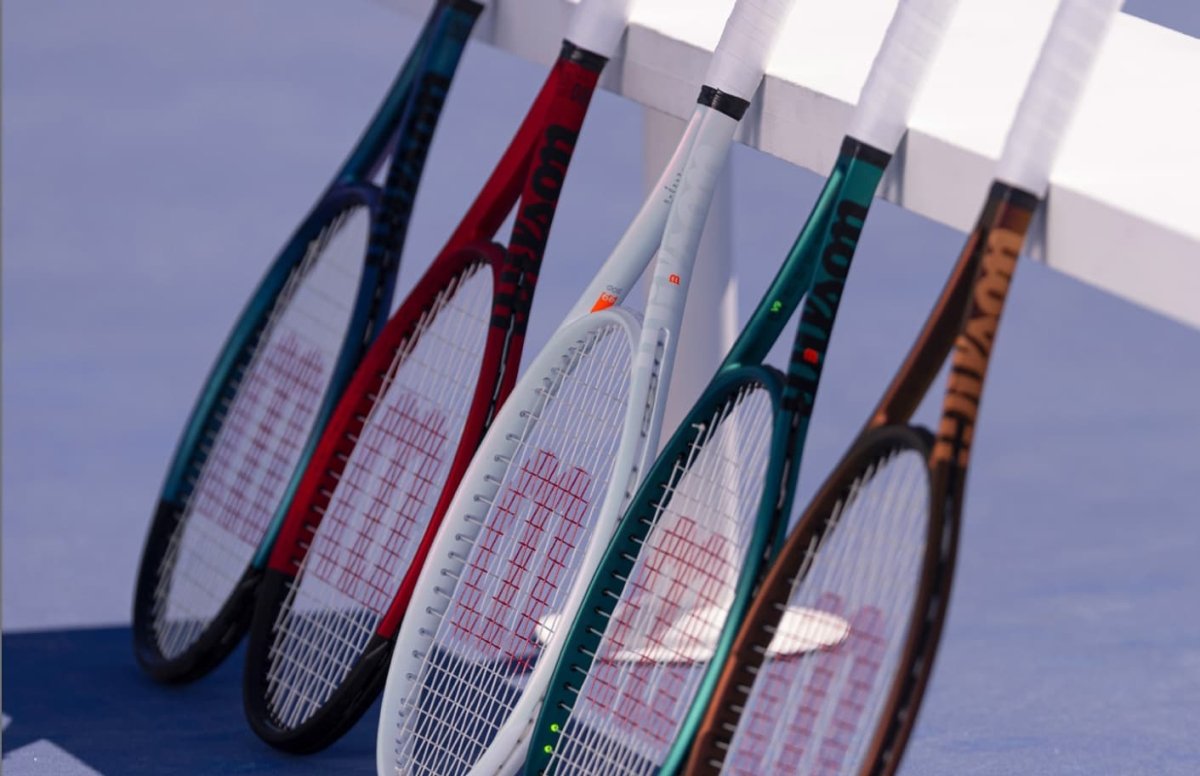
Wilson is a legendary name in tennis, crafting high-quality racquets for generations of players. Known for innovation and a diverse lineup, Wilson offers something for everyone, from the aspiring beginner to the seasoned pro. Whether you prioritize power, control, or comfort, there's a Wilson racquet out there with your name on it.
In this Wilson tennis racquet guide, we'll walk through the current line: Blade, Clash, Ultra, Defyer, RF 01, Pro Staff and Triad. What each one is built to do, and which players it suits. Every racquet we recommend at the end is in stock as we write this, and you choose whether it ships strung or as a bare frame.
Wilson Racquet Series: A Breakdown
Each Wilson series is built around a different priority. Here's how they differ.
1. Wilson Blade:

Control, with enough spin to hurt. The Blade has always been the all-court player's frame, and the V10 keeps what defines it: X-Loop shoulder geometry for a dampened, connected feel, Direct Connect running carbon straight from handle to end cap, and a braided graphite layup that flexes in a controlled way and tells you exactly where on the string bed you made contact. It is a racquet that rewards technique rather than compensating for its absence.
- Blade 98 (18x20) V10: The densest pattern in the line. Control first, for players who bring their own pace.
- Blade 98 (16x19) V10: Same frame, open pattern, noticeably more spin and a livelier string bed.
- Blade 100 V10: 100 in² and 16x19 at 300g unstrung, 4 points head light. Wilson pitch this at advanced players; we'd agree, but it is the most approachable Blade of the three.
- Blade 100L / 100UL / 104 V10: Progressively lighter and more forgiving as you move up the range.
2. Wilson Clash:

Comfort and forgiveness. The Clash is the frame we recommend most often to club players and to anyone who has had elbow or shoulder trouble. It flexes in a way almost no other racquet does, which takes the sting out of contact without turning the racquet into a noodle.
- Clash 100 V3: The default choice, and our most popular racquet full stop.
- Clash 100 Pro V3: A little heavier and more stable for stronger swings.
- Clash 100L / 108 V3: Lighter and larger-headed options when manoeuvrability matters more.
3. Wilson Ultra:

Easy power and spin. The Ultra does more of the work for you. Larger sweet spots, aerodynamic frames and a lively response make it the natural pick for players who want depth without having to swing out of their shoes.
- Ultra 100 V5: The core model. Power on tap, generous sweet spot.
- Ultra 99 Pro V5: Tighter and more controlled for advancing players.
- Ultra 100L / 100UL / 111 / Team V5: Lighter frames and the biggest heads in the Wilson range.
4. Wilson Defyer:

Spin, and the depth that comes with it. The newest line in the range and the most single-minded about what it wants to do. A TORQ Shaft shapes the throat for leverage and stability, turning more of your swing into racquet-head speed; a dual taper beam and parallel drilling widen the part of the string bed that actually responds, so contact a little off centre still comes back with shape instead of dying. It is built for players who want to load the ball and push opponents back, without having to generate every bit of that pace themselves.
- Defyer 100 V1: The one most players land on. 100 in², 16x19, 300g unstrung, 9 points head light.
- Defyer 98 Pro V1: Tighter and more demanding, for long fast swings that prioritise precision over margin.
- Defyer 100L / 100UL V1: Same head and pattern in a lighter, faster-swinging frame.
5. Wilson RF 01:

Federer's frame, and more playable than you'd expect. The RF 01 succeeds the Pro Staff RF97 as Roger Federer's signature racquet, co-designed with him for his final tour year. A 98 in² head and an open 16x19 pattern make it far more spin-friendly than its reputation suggests, and at 64 RA with polyurethane Feel Fill damping the vibrations, it plays softer than most control frames. Wilson pitch it at intermediate to advanced players, not specialists only.
- RF 01: The standard model. 300g unstrung, 9 points head light, versatile against heavy baseliners.
- RF 01 Pro: Heavier and more demanding, for players who already generate their own pace.
- RF 01 Future: The most accessible weight in the family.
6. Wilson Pro Staff:

Precision and feedback. The Pro Staff is the oldest name in the Wilson line and still the most connected-feeling. Braided graphite, a thin beam and a smaller head give you exactly what you put in. Wonderful if you strike the ball cleanly, unforgiving if you do not.
- Pro Staff 97 Classic: The traditional control frame.
- Pro Staff 97L Classic: The same feel at a weight most club players can handle.
- Pro Staff Team 100 Classic: A lighter, larger-headed entry into the family.
7. Wilson Triad:

Built around the arm, not the swing. The Triad is the one Wilson line designed first for comfort. A three-piece construction separates the hoop from the handle with Iso-Zorb shock isolation, so far less of the impact reaches your elbow. Hammer Technology moves weight into the head, which means these frames are light in the hand but still generate pace, and Power Holes stretch the grommets to enlarge the sweet spot. If you have had tennis elbow, start here.
- Triad Five: 103 in², 27.24 inches, 9.9 oz strung. The more conventional of the two.
- Triad Three: 113 in² oversize at 27.5 inches and 9.8 oz strung, with a genuinely large, forgiving head and extra reach.
- Both are head-heavy and extended-length, which takes a few sessions to adjust to if you are coming from a standard frame.
Choosing the Right Wilson Tennis Racquet
Four things decide this, and none of them is brand loyalty.
- Head size. 98 in² and under gives you control and feedback but a smaller margin for error. 100 in² is the sensible middle. 104 in² and above is genuinely forgiving and worth it if you are missing the sweet spot often.
- Weight. Heavier frames are more stable against pace but tire you out and slow your preparation. If you are late on the ball at the end of a match, you are probably overracqueted.
- String pattern. 16x19 is open: more spin, shorter string life. 18x20 is dense: more control, more durability, less help with spin.
- Arm health. If you have had tennis elbow, this outranks everything else. Flex and comfort matter more than head size or weight.
If you're starting out
Lighter frames and larger sweet spots. Nothing here punishes a swing you're still building.


If you play regularly
Enough control to place the ball, enough help to keep long rallies honest.


If you're an advanced player
Smaller heads and more feedback. You supply the pace. The Pro Staff 97 Classic and RF 01 Pro sit here too if you want more weight.


If you have arm or elbow trouble
Shock absorption and flex matter far more here than head size or weight. Both Triads are head-heavy and longer than standard, so give them a few sessions.


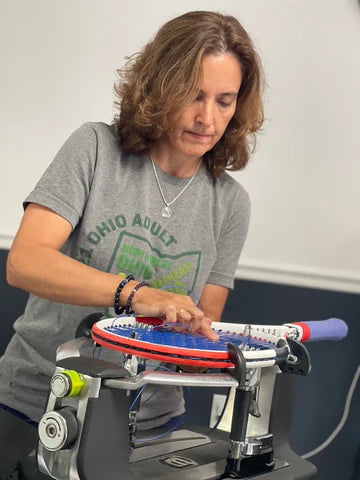
Every racquet on this page ships however you want it. If you string your own, or you have a stringer you trust, take the bare frame. There’s no upcharge either way.
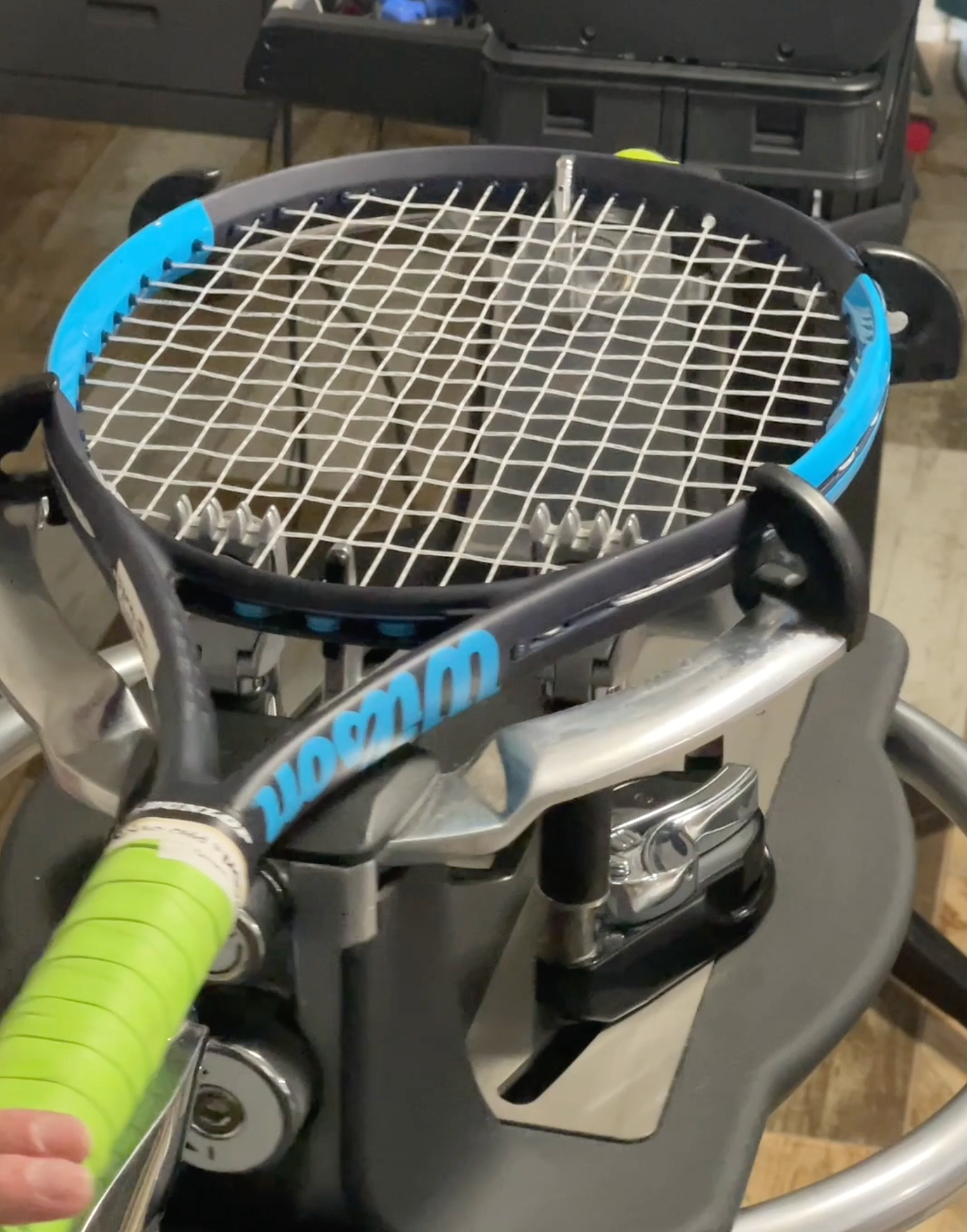
If you’d rather we did it, pick a stringing option on the product page. The stringing labour is free whichever string you choose. You pay for the string only: our synthetic gut is $4.99, or choose from over 60 premium strings (Luxilon, Solinco, Tecnifibre, natural gut) from $10.99. Tell us your tension in the notes and we’ll set it exactly.
Already have a racquet that needs restringing? You can mail it in from anywhere in the US, or if you’re near Kettering, we’ll pick it up and bring it back.
One email: how head size, weight, balance and string pattern actually change what you feel, plus which string suits your game. No spam, unsubscribe any time.
Still not sure?
Tell us how you play and we’ll tell you what to hit with. We’ve been stringing and fitting racquets in Kettering, Ohio for over 14 years, and we answer every email ourselves.


Leave a comment
All comments are moderated before being published.
This site is protected by hCaptcha and the hCaptcha Privacy Policy and Terms of Service apply.